
San Francisco
On the Question of Religion: Can the Dalai Lama and Democracy Coexist in Contemporary Mongolia
Not yet a member? Members receive ticket discounts, free events, special programs, our travel program, early notice of big events, and more; plus, your membership helps sustain our nonprofit organization's work. You can become a monthly sustaining member for just $13 a month.
Make no mistake, the Mongols and the United States are two of the most important nations in all of world history. As rulers of the world’s largest contiguous empire, the Mongols of Chinggis Khan took government of aristocrats, by aristocrats, and for aristocrats to its apotheosis. Having achieved the ultimate limit to its power, it was the Mongols too who brought that order to its end.
Through their creation of the institution of the Dalai Lama and transference of power to Géluk Buddhism, the Mongols ended the age of kings, when the likes of Qubilai Khan reigned supreme, and ushered in the age of soteriological dominion, dual regency government of priests, by priests, and for priests, wherein church and state ruled in tandem under the ultimate authority of the church.
With ratification of James Madison’s First Amendment to the U.S. Constitution on December 15, 1791, Americans rent asunder what the Mongols had joined in one and gave the world democracy, government of the people, by the people, and for the people. Dr. Brian Baumann's talk discusses this arc to world history simply as a question of religion. Drawing from his experience in Mongolia as a Peace Corps volunteer and his academic work as a scholar of Mongolian Studies, Dr. Baumann in his talk at Commonwealth Club World Affairs hopes to use its exercise in comparative religion to bring meaningful perspective to contemporary world politics.
About the Speaker
Brian Baumann teaches UC Berkeley's Mongolian Studies' curriculum in the departments of East Asian Languages and Cultures and Group in Buddhist Studies. His pursuit of Mongolian studies stems from a two-year tenure in Mongolia with the Peace Corps, 1991–93. His scholarship covers the history of Mongolia broadly with concentration on language, science and religion.
Organizer
Jim Brown
Notes
This program is in-person only. If you have symptoms of illness (coughing, fever, etc.), we ask that you either stay home or wear a mask. Our front desk has complimentary masks for members and guests who would like one.
Commonwealth Club World Affairs of California is a nonprofit public forum; we welcome donations made during registration to support the production of our programming.
An Asia-Pacific Affairs Member-led Forum program. Forums at the Club are organized and run by volunteer programmers who are members of The Commonwealth Club, and they cover a diverse range of topics. Learn more about our Forums.
In partnership with the Consulate General of Mongolia in San Francisco.
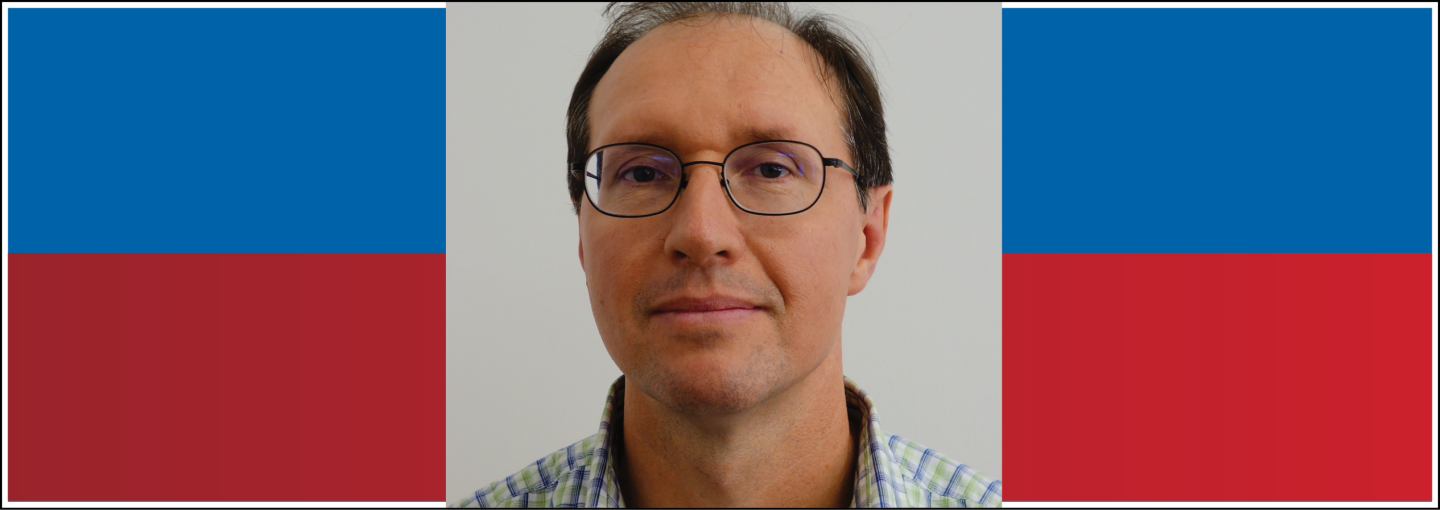
Photo courtesy of the speaker.
Commonwealth Club World Affairs is a public forum. Any views expressed in our programs are those of the speakers and not of Commonwealth Club World Affairs.
All ticket sales are final and nonrefundable.
Mon, May 4 / 6:30 PM PDT
The Commonwealth Club of California
Toni Rembe Rock Auditorium
110 The Embarcadero
San Francisco, CA 94105
United States
Speakers

Dr. Brian Baumann
Professor of Mongolian Studies, U.C. Berkeley

Moderator: Jim Brown
Program Organizer, Asia-Pacific Affairs Member-led Forum, Commonwealth Club World Affairs of California
Format
6 p.m. doors open & check-in
6:30–7:30 p.m program
(all times Pacific Time)
COST
Members receive 30–50 percent discounts (not a member? Join)
In-person:
$22
Free for Leadership Circle members and for students
