What Diversity, Equity, and Inclusion Mean for the Health Sciences, and Why Big Data Needs Them All
Sometimes, because of the current political pushback, one can get the false impression that the academic attention that has recently been paid to increasing a university’s diversity, equity and inclusion profile is a new phenomenon—one that developed after the civil rights gains of minorities and women in the 1950s-70s. But the idea that people with different backgrounds, experiences, and viewpoints would produce better work by engaging with each other was a core principle of the first modern research university—which was founded in Germany in 1810.
The health sciences are especially dependent on accurate data, and imaginative but reasoned analysis of that data, and both the accuracy of the data and the usefulness of its analysis are put at risk by pretending that diversity, equity and inclusion are harming universities, including medical research universities, rather than helping them. The known inaccuracies caused by a historical research emphasis on male health, and inappropriate applications of those conclusions to female health due to the lack of research data on women, are examples of the risks involved.
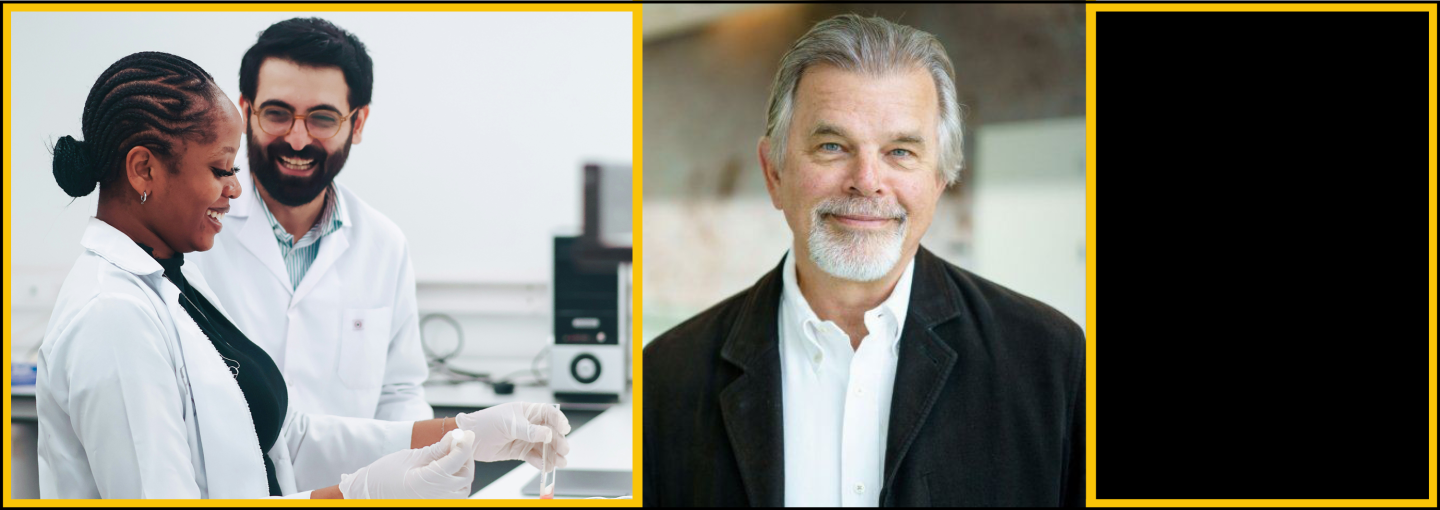
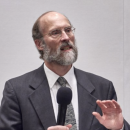
Join us to hear Dr. Robert Hiatt, whose central focus at UCSF has been on building a strong transdisciplinary research and training program in epidemiology, make the case for how scientifically harmful deemphasizing diversity could be, and how the emergence of Big Data will be derailed quickly if the data that it uses has been corrupted by political whims distorting its scientific objectivity.
In association with The Lundberg Institute and the Philip R Lee Institute for Health Policy Studies at the University of California, San Francisco (UCSF).
A Humanities Member-led Forum program. Forums at the Club are organized and run by volunteer programmers who are members of The Commonwealth Club, and they cover a diverse range of topics. Learn more about our Forums.
Speaker photos courtesy the speakers; scientists photo in main image by Amari Shutters on Unsplash.
The Commonwealth Club of California
Taube Family Auditorium
110 The Embarcadero
San Francisco, CA 94105
United States
Robert Hiatt
M.P.H., Ph.D., M.D., Professor of Biostatistics and Epidemiology, UCSF School of Medicine
Introduction by George Lundberg
M.D., Editor in Chief, Cancer Commons; Editor at Large, Medscape; Clinical Professor of Pathology, Northwestern University; President and Chair, The Lundberg Institute
Moderator: George Hammond
Chair, Humanities Forum